
Making a School's Culture a Reason to Enrol
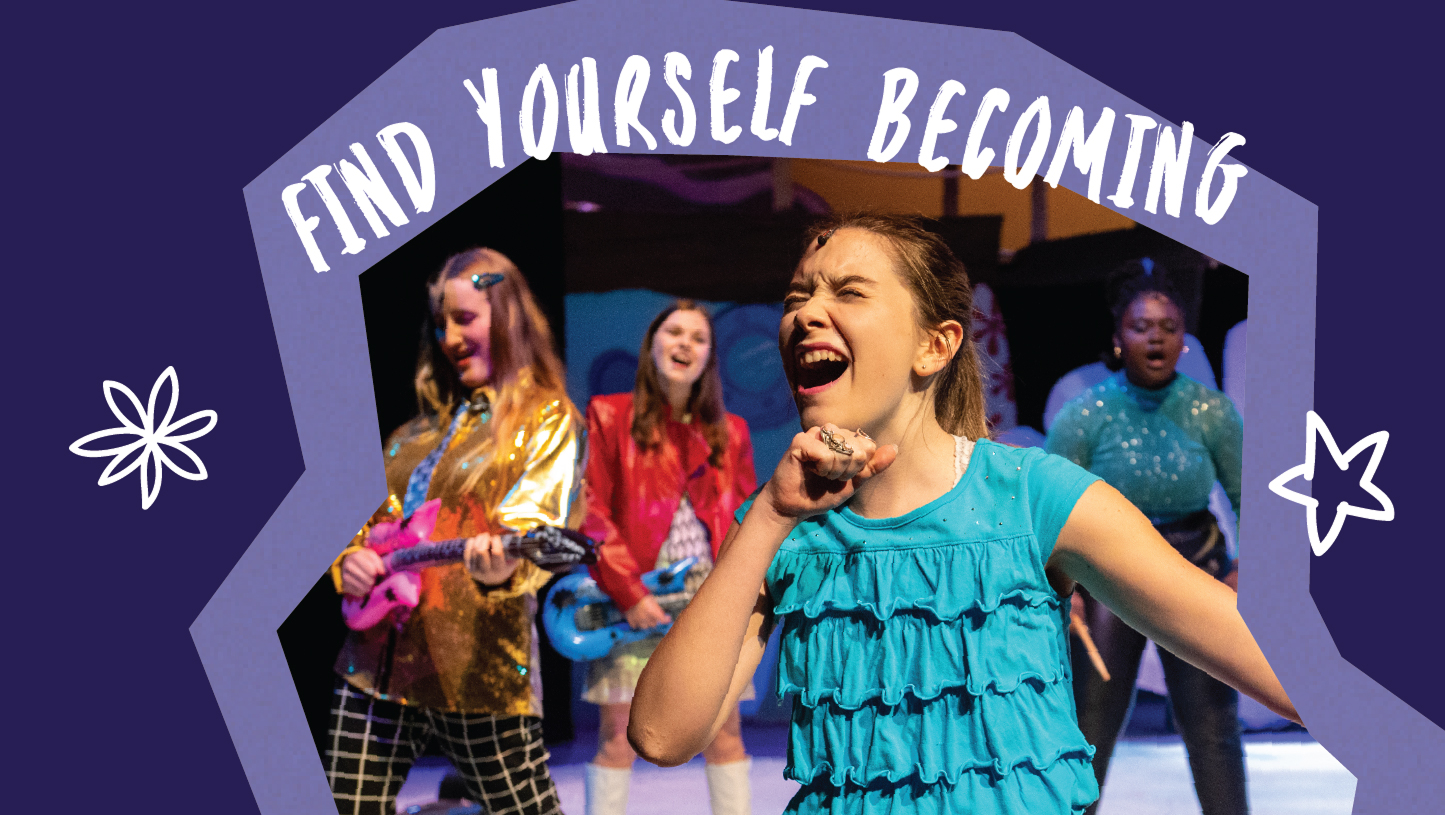
Abington Friends School (AFS) is a Quaker school in the Philadelphia area for students from preschool to Grade 12, built on a simple but powerful idea: education should develop the whole person.
Grounded in values of physical, emotional, social and spiritual wellbeing, AFS pairs strong academics with a deeply human approach to learning. It’s a place where students are known, supported, and encouraged to grow into who they’re becoming, offering a personal, purpose-driven alternative to the traditional private education model.

AFS needed to connect with values-driven parents of lower and upper school students in Philadelphia who are considering private school options, but often overlook the school in favour of institutions they perceive to be more academically competitive.
The challenge was to reposition AFS as a distinct, human-centred alternative, one where academic growth, belonging, and purpose coexist, and where families could see both a strong education and the right environment for their child to thrive.
The real tension isn’t about just having access to elite education, it’s about support for the child as a whole.
Find Yourself
preferences, and, ultimately, themselves.
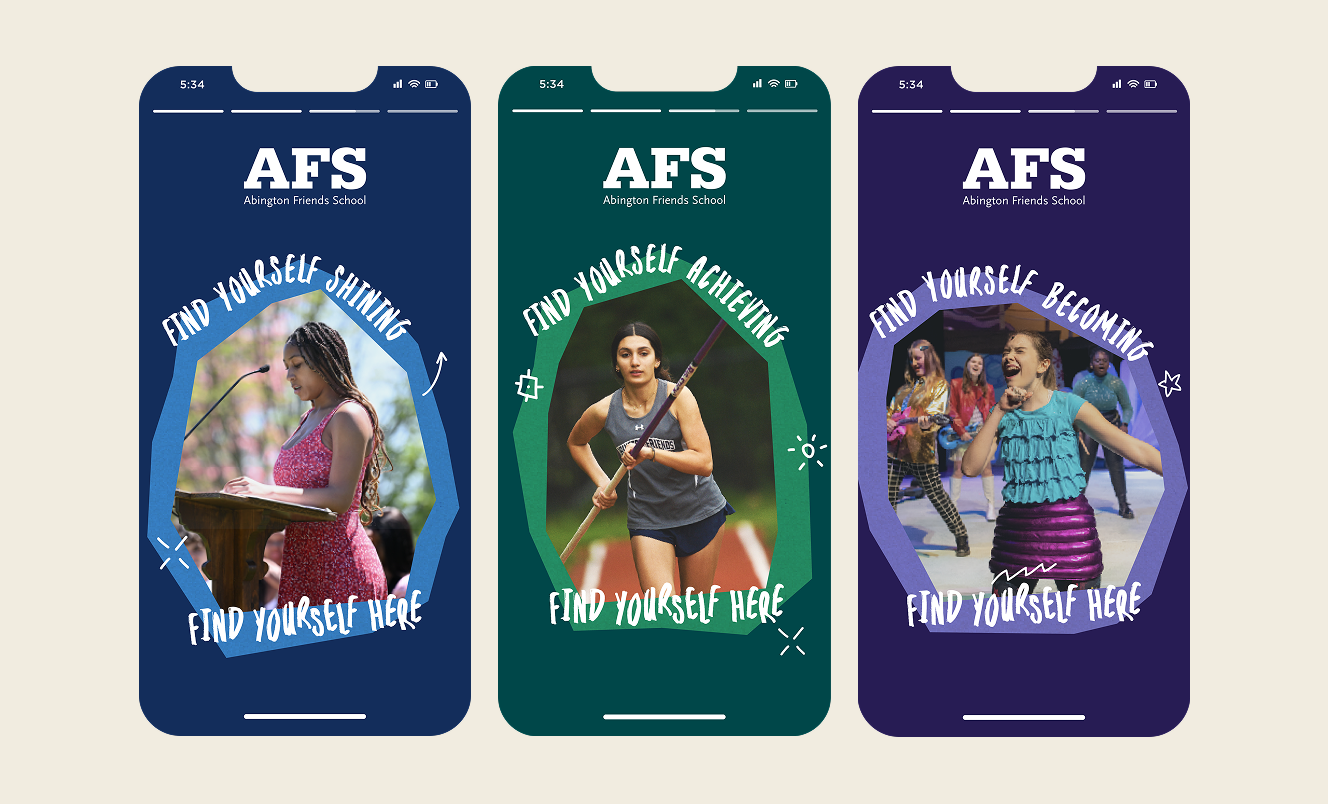
The “Find Yourself” platform was built on this experience: education isn’t just about who you become academically, but who you become as a person.
We developed multiple variations of campaign messaging, speaking directly to prospective students.
Messaging included:
- Find Yourself Shining
- Find Yourself Achieving
- Find Yourself Becoming
Lower school messaging spoke directly to parents.
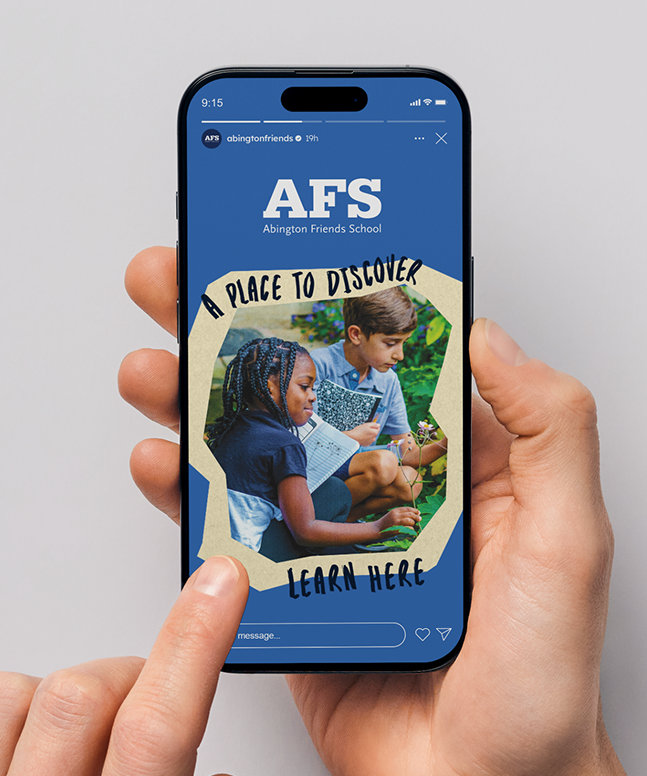
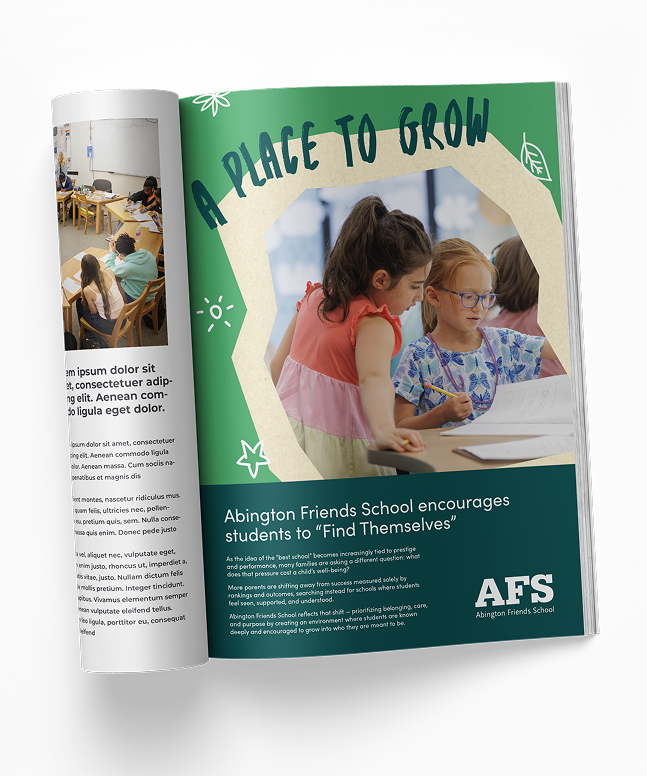
Supporting framework was created to speak directly to parents of younger students who are searching for more than just academics: a school that can provide the stability, guidance, and environment their child needs to grow with confidence. At the heart of a strong education is a foundation built on fundamentals, care, and support.
- A Place to Dream
- A Place to Grow
- A Place to Discover
AFS experience to life in a more personal and engaging way.
Shot on campus, the video centres the perspective that matters most in education: the student’s.
Every piece of the work is responding to the same underlying shift: families are no longer just asking, “What school will get my child ahead?” but “What environment will actually help my child become who they are?”
The question shows up differently across audiences, but it comes from the same place—parents wanting stability, care, and long-term wellbeing, and students wanting identity, voice, and belonging.
That’s why the strategy splits but stays connected.
“A Place To” speaks to the parent mindset: the need for a foundation where a child can feel safe, supported, and set up to grow. “Find Yourself” speaks to the student experience: the lived reality of figuring out who you are in real time.
Two audiences, one truth—education is no longer just about achievement, it’s about experience.
This creative campaign took Abington Friends School from being a choice in a competitive school landscape to being a direct answer to what families are actually searching for: a place where students don’t just perform for progress, but belong, grow, and leave more themselves than when they arrived.

hello@brandishagency.com