
Driving a Car Share Brand Into Everyday Life
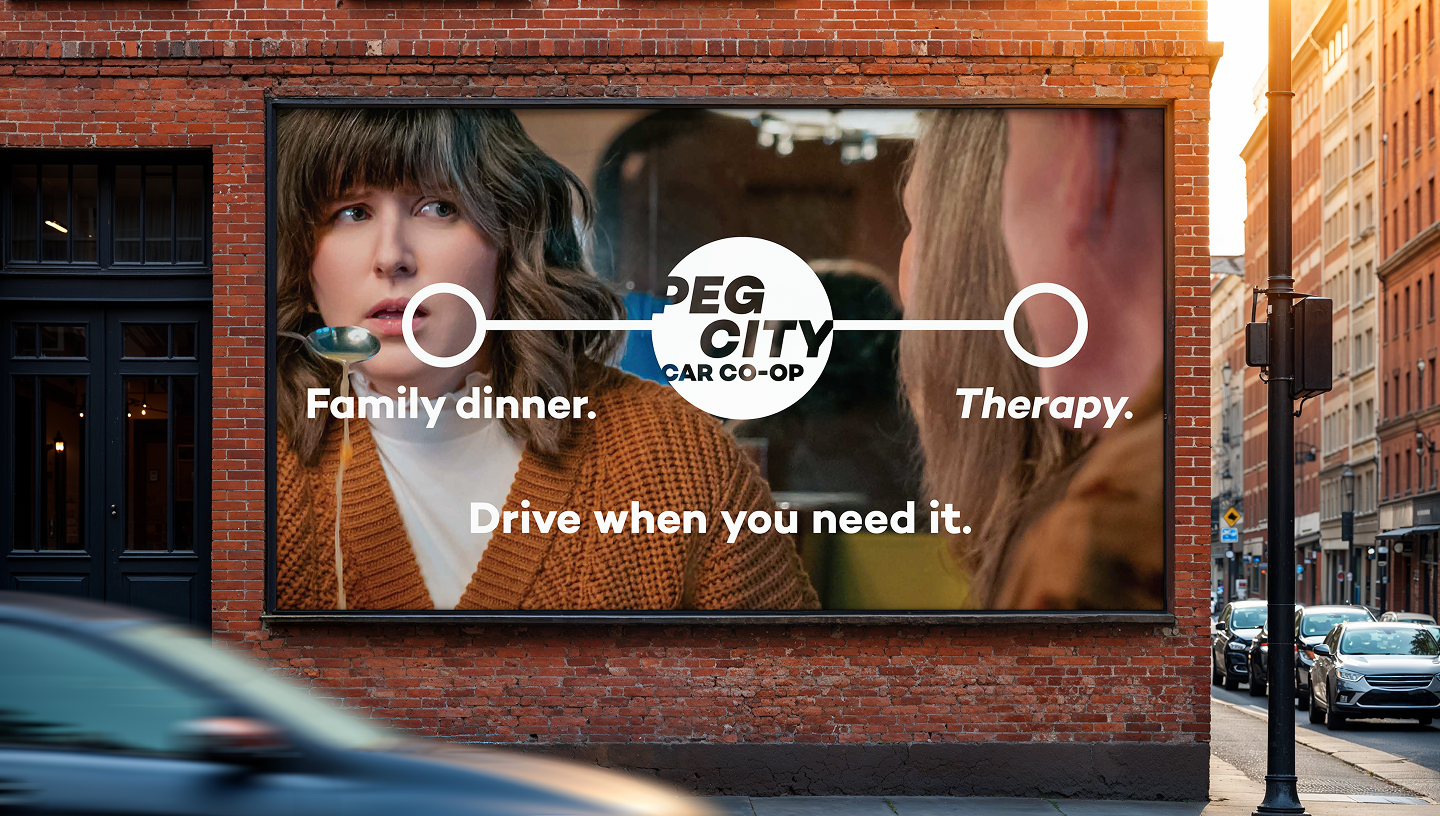
We teamed up with Winnipeg’s Peg City Car Co-op to build awareness and adoption, and to reframe carsharing as a simple, flexible option for trips where driving beats the alternatives.

People don’t understand where car sharing fits in their lives.
Instead of seeing it as a flexible, situational tool, they’re miscategorizing it—either as a full replacement for owning a car (which feels unrealistic for many), or as something inconvenient and unreliable (which makes it easy to dismiss altogether). In some cases, it’s not even considered an option.
The issue isn’t the service—it’s the positioning.
Peg City Car Co-op is trying to shift from selling what it is (a car-sharing service) to owning when it matters—those in-between moments when other modes fall short.
Peg City is the middle point between where you are and where you need to be.
The strategy was to make Peg City the mental shortcut for the in-between. People focus on point A and point B. Peg City becomes relevant in the middle with errands, appointments, awkward obligations, last-minute plans, and so on. If we could make that “middle” feel familiar and frequent, Peg City becomes the obvious choice without needing a hard sell.
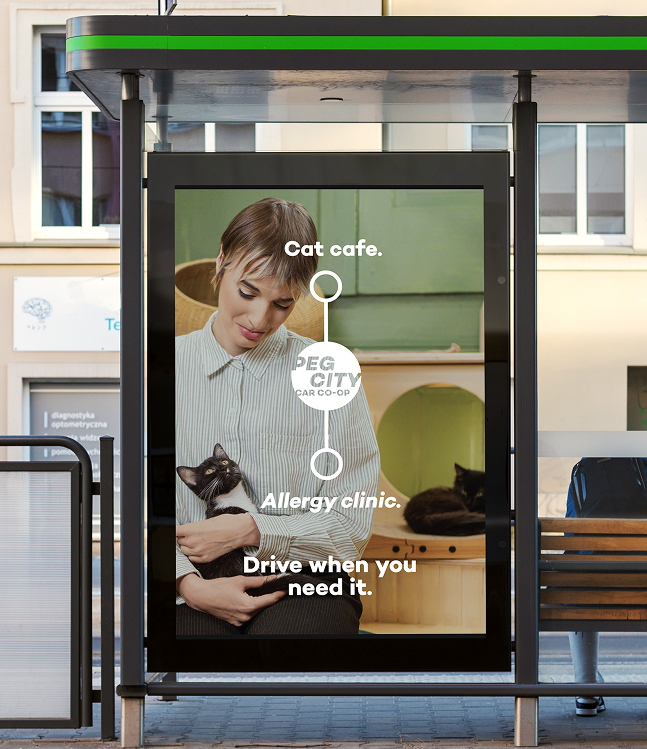
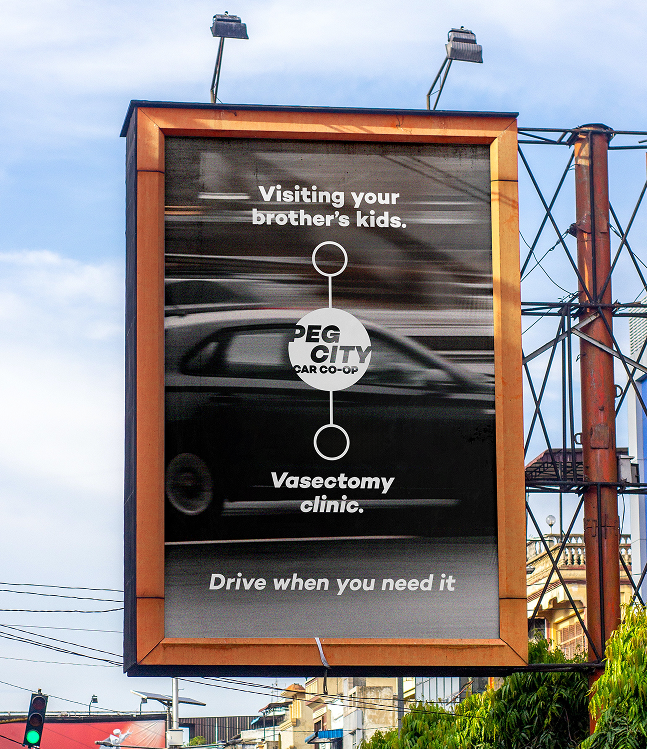
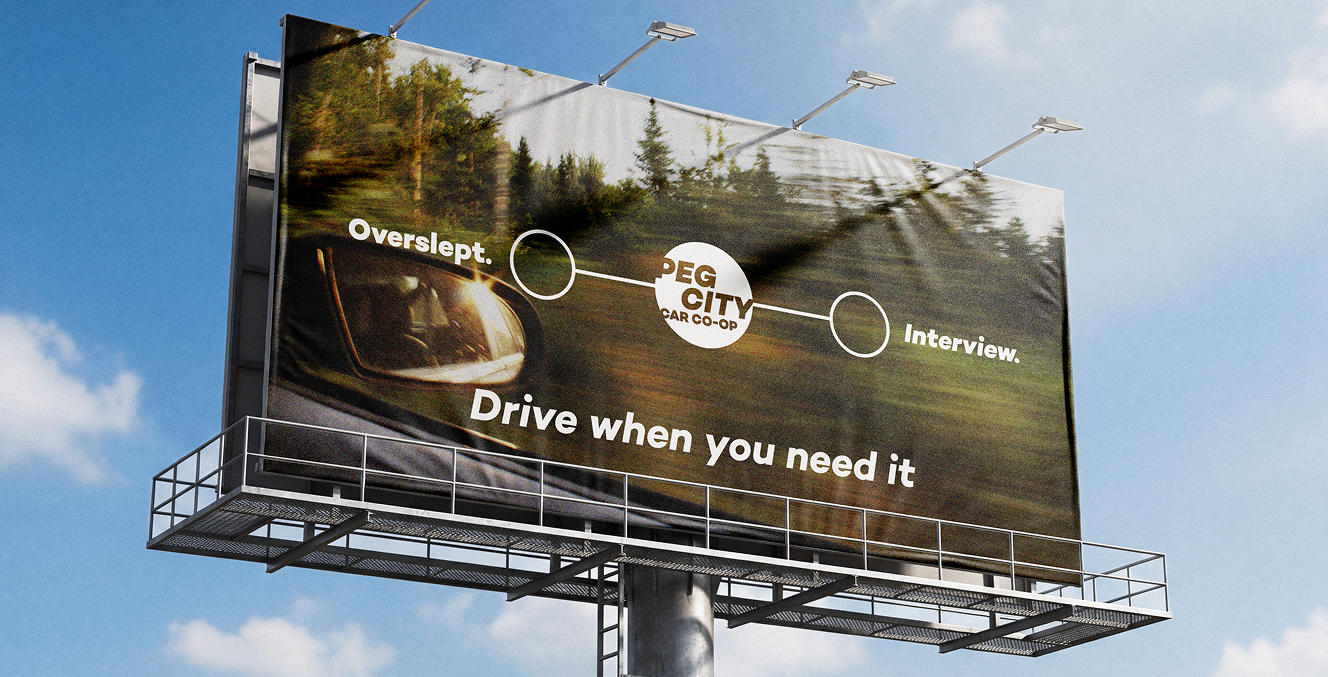
The creative idea, “Peg City in the Middle,” turned that strategy into a simple, repeatable format that places Peg City between everyday destinations.
The tone stayed human and specific, using recognizable situations to make the service feel practical and easy to picture.
Visually, the campaign stayed intentionally clean and consistent. Typography-forward layouts with motion photography suggest movement and possibility.
The modular campaign system ran across OOH for broad, repeated exposure and across paid/organic social for frequency and reinforcement. Short videos extended the same structure through quick vignettes that mirror real life, keeping the focus on usefulness rather than features.
The campaign launched in two phases- OOH and digital, then video.
The video extensions lean into a more playful, human layer of the campaign, exploring the smaller, interconnected trips the service can support.
We produced three videos, Family Therapy, Pickleball, and Cat Cafe. Shot over two days across three locations, each piece was crafted to reflect the tone, pace, and personality of its respective scenario.
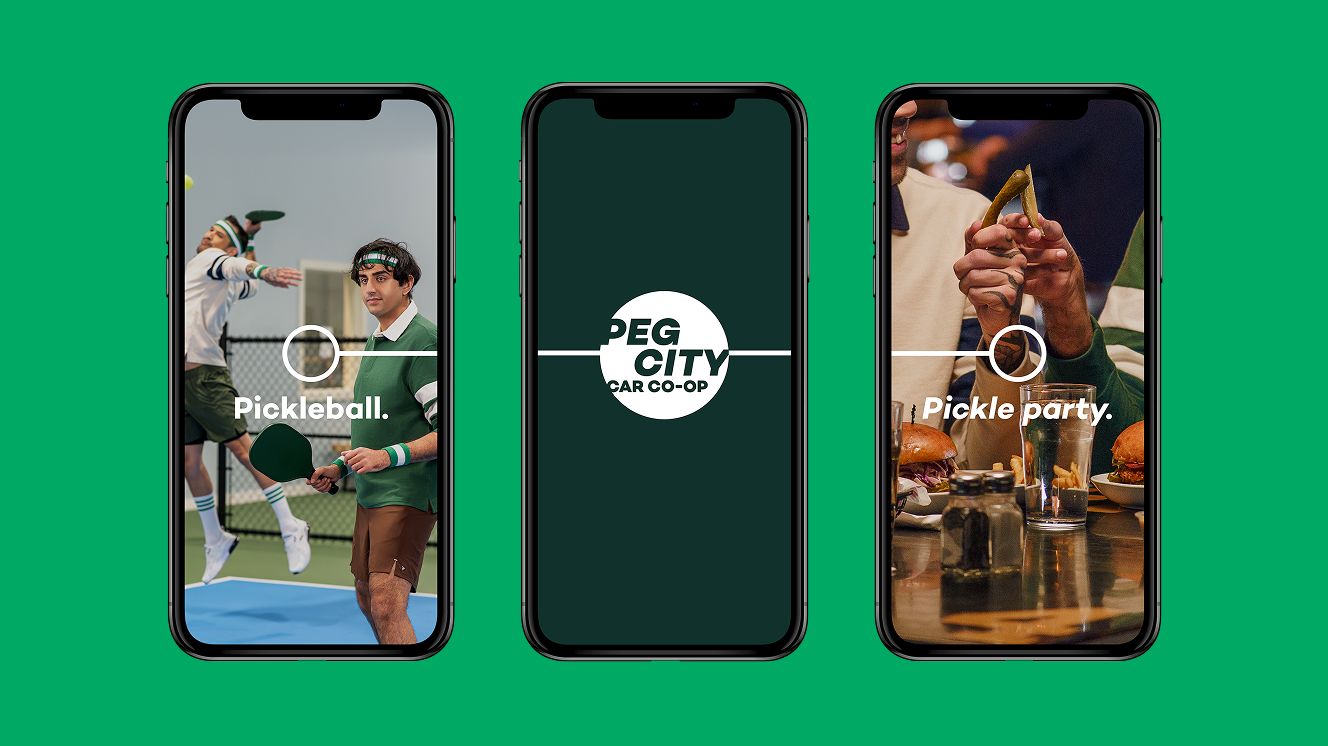
The “Peg City in the Middle” campaign removes friction around car sharing by replacing abstraction with clear, action-based creative and copywriting rooted in real-life scenarios.
It places Peg City Car Co-op directly into everyday decision-making moments, where transportation choices are fast, habitual, and often made on instinct, making the service an immediate and intuitive option within that mix.
By anchoring the idea in human-centred moments, habits, and behaviours, the campaign repositions Peg City beyond its existing user base and into the broader rhythm of daily mobility. It shifts the brand from something people have to consider into something that naturally sits “in the middle” of how they already move through the city.

hello@brandishagency.com