
Making Veteran Homelessness Impossible to Ignore
Veterans’ House Canada is a nonprofit providing permanent, affordable housing and comprehensive support services to Canadian veterans experiencing, or at risk of homelessness.
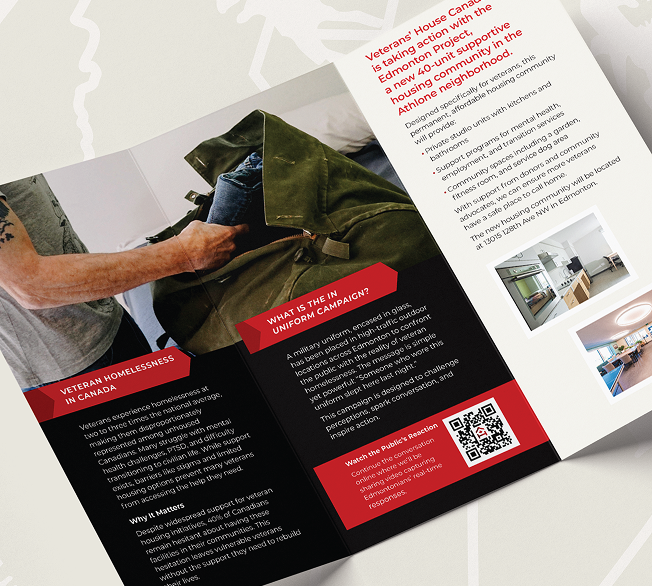
The organization was preparing to bring its supportive housing model to Edmonton with a new development in the Athlone neighbourhood.
When the project was announced, a small but loud pocket of online resistance threatened to dominate public perception, and site signage was vandalized.
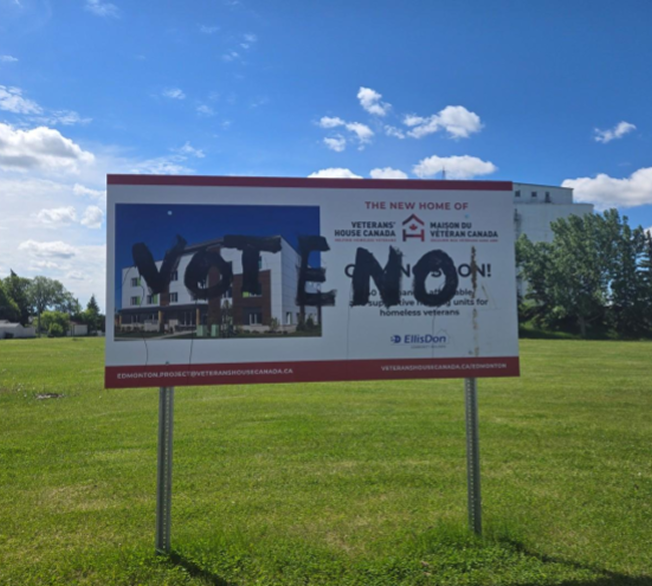
The negativity risked becoming the story instead of the veterans the project was designed to support.
The task was to shift public sentiment and make community support visible: educate Edmontonians, reduce the stigma around supportive housing, and create an environment where veterans would feel welcomed, both within the new development and in the wider community.
Most Canadians deeply respect veterans. That support gets complicated when a housing initiative arrives close to home. Meanwhile, veteran homelessness remains a serious issue across Canada, driven by mental health challenges, substance use, trauma, and the difficulty of transitioning from military to civilian life, with female veterans especially vulnerable.
The gap between respect for the uniform and resistance to the housing was the insight: people couldn't relate veteran experience to homelessness.
The message had to humanize the issue, making the invisible visible.
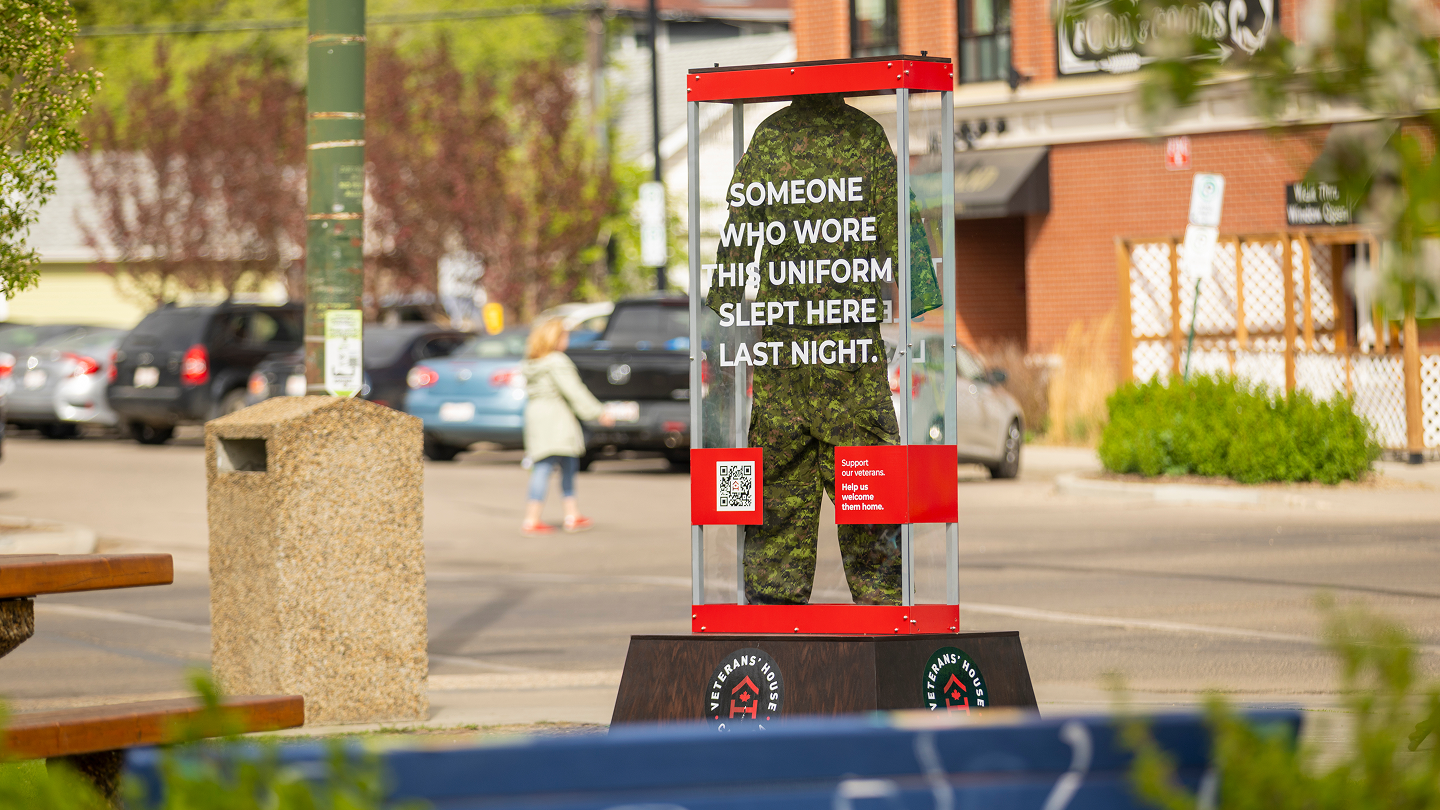
Veterans are three times more likely than other Canadians to experience homelessness. That reality inspired In Uniform, a city-wide campaign built around a single confrontation:
“Someone who wore this uniform slept here last night.”
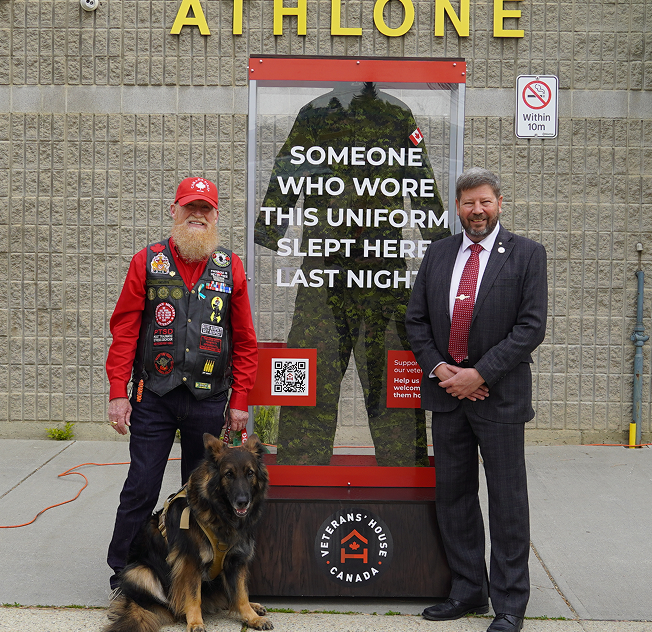
The installation was built to feel immediate, human, and impossible to ignore, and its placement did much of the work.
And its placement did much of the work: high-traffic public spaces, community hubs, cultural destinations, and places where the public already encountered homelessness.
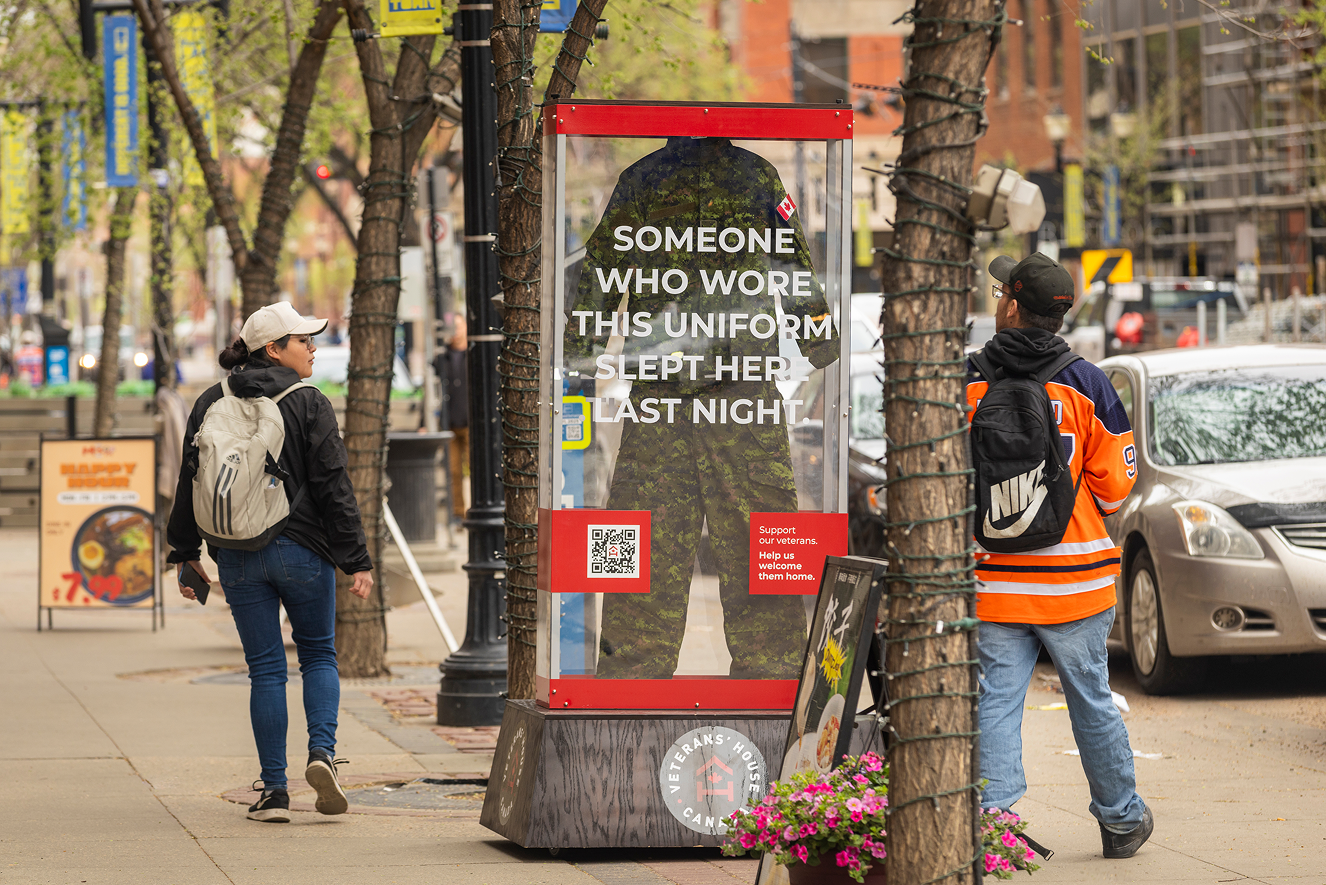
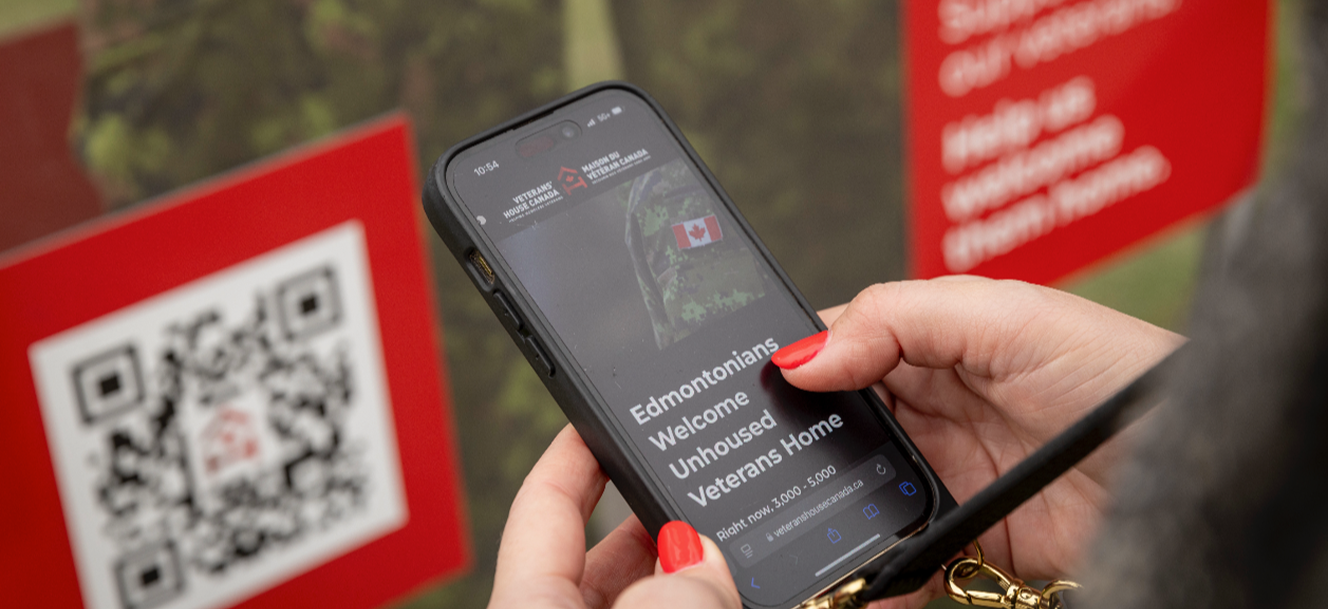
Hundreds stopped to observe, reflect, and share emotional reactions. Those unscripted moments became the foundation of the campaign video, which carried the experience from the streets onto social media, where viewers commented, shared their own stories, and turned empathy into donations.
In Uniform turned quiet support into visible action, moving the conversation into real spaces where empathy could do its work.
Dignity, safety, and belonging should not end when military service does. No one who wore the uniform should be left without a place to come home to.
.svg)
hello@brandishagency.com