
Putting Money Behind the Next Generation of Tradespeople

Backed by a new federal grant, FPDI was mandated to achieve 5,600 apprentice hires in two years, with 1,900 from equity-deserving groups.
The program helps small and medium-sized businesses hire first-year apprentices through financial incentives, which double when the apprentice is from an equity-deserving group. The logic is grounded in research: apprentices who have an employer after their first year are far more likely to complete their program.
The trades are facing a labour shortage. As baby boomers retire, apprenticeship applications should be rising.
Instead, registrations fell 27 per cent in 2020 and had not bounced back, and the industry’s heavily white, male profile made attracting new entrants harder still.
The campaign had to work on two audiences at once: employers who would hire apprentices, and people who might consider the trades, each needing to see a different advantage in the same program.

The research told a contradictory story.
People respected the trades and had quietly ruled them out.
Take on the Trades.
The line works two ways: apprentices take on a new career, and employers take on the apprentices who need training.
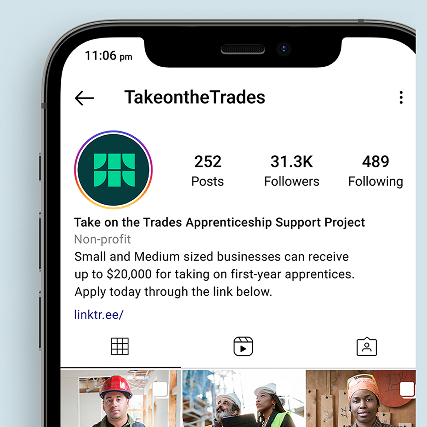
Behind both invitations was the plainest offer in marketing: money. FPDI pays employers to hire first-year apprentices — more if that apprentice comes from an equity-deserving group. The campaign led with that.
A contemporary and tech-forward design sets the campaign, apart from the category's usual look. For apprentices: the work is technical, hands-on, stable, and well paid — and the campaign confronts misconceptions by showing how underrepresented groups have thrived in the trades. For employers: the financial case up front, plus how FPDI supports onboarding through to completion.

Media placement followed each audience through its day.
For employers: home improvement stores, the backs of buses, radio, and industry newspapers. For prospective apprentices: the insides of those same buses, social media, and Spotify, meeting young people where they spend time and where a career change might already be on their mind.


Canada’s trades shortage is usually treated as a recruitment problem, solved with job boards and incentives.
The research pointed somewhere deeper: a generation that respects the trades has been taught to see them as someone else’s future. Take on the Trades treated the trades like a brand worth choosing, and the industry’s diversity gap as its growth opportunity. The result is a workforce program that also moves culture, building a trades industry where everyone can feel welcomed.
.svg)
hello@brandishagency.com